
How Marketing Teams Are Using GenAI?
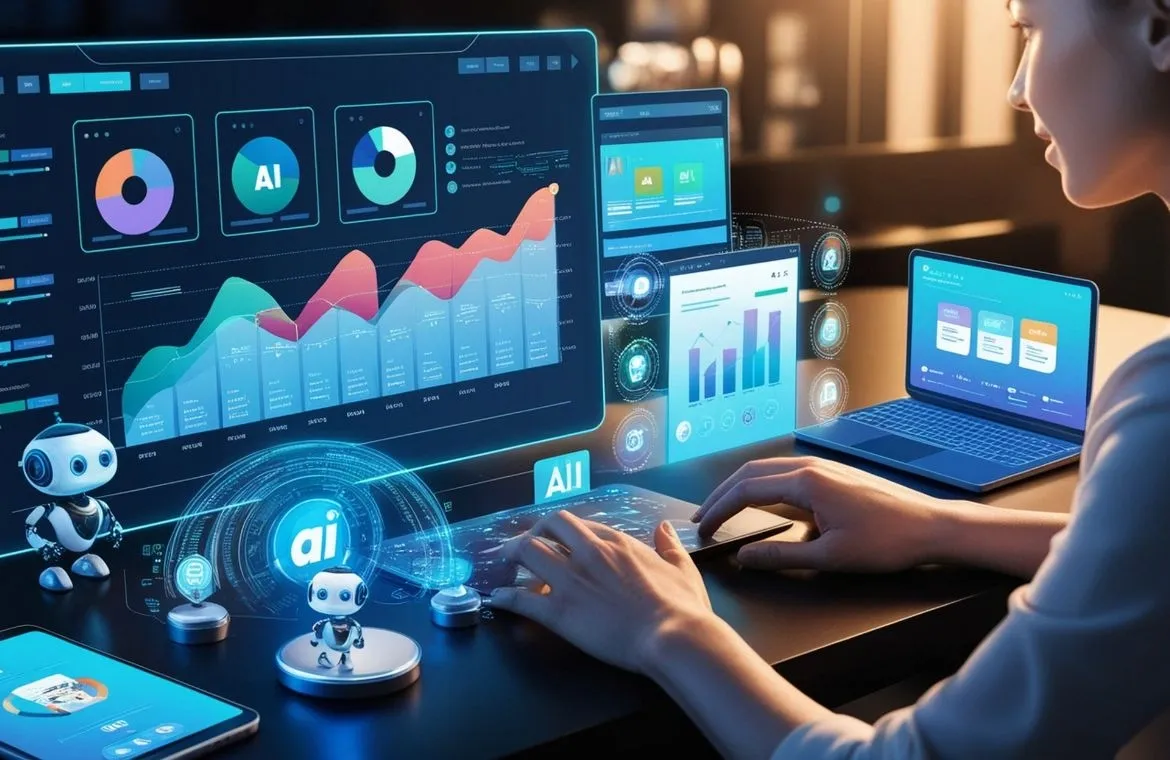
Marketing today moves at an incredible pace. Brands are expected to create more content than ever before, respond to trends instantly, and deliver highly personalized experiences across multiple digital channels.
For marketing teams, keeping up with this scale while maintaining creativity and consistency can be a significant challenge.
This is where Generative AI (GenAI) is beginning to reshape the marketing landscape. Instead of relying solely on manual processes, marketers are now using AI-powered tools to generate ideas, create content, design visuals, and analyze customer data in ways that were previously difficult to achieve at scale.
Also Read: A Complete Overview of AI in Marketing
How Marketing Teams Are Using GenAI for Different Purposes?
Marketing has always been a mix of creativity, experimentation, and data. But in today’s digital-first world, the pace of marketing has accelerated dramatically.
According to a research, 73% of marketing teams now use generative AI in their workflows, showing how rapidly the technology is being adopted across marketing functions.
So, Instead of replacing marketers, GenAI is acting as a powerful collaborator, helping teams generate ideas faster, create content at scale, and uncover insights that might otherwise take hours or even days to discover.
Let’s explore how this transformation is playing out across different marketing activities.
Creating Personalized Content for Every Customer
One of the biggest challenges in marketing is delivering personalized content to thousands, or even millions, of customers.
Generative AI enables marketers to create tailored messages for different audiences based on customer behavior, demographics, and preferences.
For example, Netflix uses AI-driven personalization to recommend content and tailor messaging based on individual viewing habits. Similarly, e-commerce companies create customized product recommendations and promotional messages for different user segments, improving engagement and conversions.
Delivering Faster Customer Support with AI Chatbots
Customer expectations for quick responses are higher than ever. Generative AI-powered chatbots help marketing and support teams provide instant assistance to customers across websites, apps, and messaging platforms.
Unlike traditional rule-based bots, modern AI chatbots can understand context, generate natural responses, and handle complex queries. They can assist with product recommendations, guide customers through purchases, or resolve common issues without human intervention.
Companies such as Shopify and Sephora use AI-powered conversational tools to interact with customers in real time, improving customer experience while reducing support workload.
Also Read: Beyond the Chatbot: How Smart AI Actually Makes Customer Service More Human
Running Smarter Ad Campaigns with AI Insights
Advertising success depends heavily on data-driven insights. Generative AI can analyze large datasets from customer interactions, website traffic, and past campaigns to predict which marketing strategies will perform best.
AI tools help marketers generate multiple ad variations, test them across different audience segments, and automatically optimize campaigns based on performance metrics. This enables marketing teams to run more effective campaigns while minimizing manual effort.
For instance, Coca-Cola has experimented with AI-driven creative campaigns that use machine learning to generate visuals and optimize ad messaging for different audiences.
Making Market Research Faster and Smarter
Market research traditionally involves extensive surveys, data analysis, and trend tracking. Generative AI significantly accelerates this process by analyzing large volumes of consumer data, social media conversations, and online behavior.
Marketing teams can use AI tools to identify emerging trends, understand customer sentiment, and predict future demand patterns. This helps organizations design better products, campaigns, and customer experiences.
According to research by Salesforce, 48% of marketers are using generative AI for research-related tasks, including market research, data analysis, and summarizing large volumes of information. This highlights how AI is increasingly helping marketing teams gather insights faster and make more data-driven decisions.
Companies such as Unilever use AI-driven analytics to analyze consumer data and improve product development and marketing strategies.
Managing Social Media More Efficiently
Managing social media across multiple platforms requires constant content creation, scheduling, and engagement monitoring. Generative AI simplifies these tasks by generating captions, suggesting content ideas, and automating posting schedules.
AI tools can also analyze engagement metrics and recommend the best times to post, helping marketers maximize visibility and interaction.
For example, social media management platforms used by brands and agencies often integrate AI features that generate post ideas and monitor audience engagement trends, enabling marketing teams to manage campaigns more efficiently.
Creating More Effective Email Campaigns
Email marketing remains one of the most effective digital marketing channels, but crafting engaging emails for different customer segments can be time-consuming. Generative AI helps marketers create personalized subject lines, email content, and follow-up messages quickly.
AI tools can also analyze open rates, click-through rates, and user behavior to optimize email campaigns automatically. This allows marketers to experiment with multiple versions of emails and improve engagement.
Platforms such as HubSpot and Mailchimp integrate AI-powered features that assist marketers in writing email copy and optimizing campaign performance.
Writing Product Descriptions Faster for E-commerce
E-commerce businesses often manage thousands of product listings, making it difficult to manually write detailed descriptions for each product. Generative AI helps automate the creation of product descriptions, specifications, and promotional content.
This allows online retailers to maintain consistent and informative product pages while saving time and resources.
Retail platforms such as Amazon and Alibaba use AI-driven systems to assist sellers in generating optimized product descriptions that improve discoverability and customer engagement.
Creating Marketing Visuals with AI
Visual content plays a crucial role in modern marketing campaigns. Generative AI tools can create images, graphics, and marketing visuals based on simple text prompts, helping designers and marketers experiment with creative ideas quickly.
This capability is particularly useful for social media campaigns, digital ads, and website design, where visual assets need to be produced rapidly.
Many brands now use AI image-generation tools like Midjourney and DALL·E to create creative visuals for marketing campaigns.
How Marketers Can Learn Generative AI?
As generative AI becomes an essential part of modern marketing, professionals need to go beyond simply using AI tools. Marketers should develop a basic understanding of how generative AI works, including concepts like large language models, prompt engineering, and AI-driven automation.
Learning to use AI tools for tasks such as content creation, campaign optimization, and customer insights can significantly improve productivity and help marketers make more data-driven decisions.
Hands-on learning is particularly important. By experimenting with AI tools and applying them to real marketing workflows, such as generating ad copy, analyzing campaign data, or automating social media content, marketers can better understand how AI can enhance their strategies and drive growth.
How the AI Infinity Program Can Help
The AI Infinity program is designed to help professionals learn AI in a practical and structured way, making it easier to apply these skills in real work environments.
The program includes around 40 hours of hands-on learning, combining expert-led sessions with flexible self-paced modules so participants can understand generative AI and agentic AI concepts step by step.
Learners also get the opportunity to explore 20+ widely used AI tools and work on industry-relevant projects, showing how AI can be used in areas such as marketing, customer engagement, automation, and business insights.
To make the program accessible to different learners, it offers two tracks:
A Functional Track for non-technical professionals like marketers, managers, and business professionals
A Technical Track for developers and individuals with programming experience
Through this program, marketers can learn how to use AI tools effectively, improve their workflows, and stay competitive in a marketing landscape that is increasingly driven by AI technologies.
Conclusion
However, the real value of generative AI lies not in replacing human creativity but in amplifying it. The most successful marketing teams are those that combine human insight, creativity, and emotional intelligence with the speed and analytical power of AI.
As organizations continue to experiment with new AI-driven tools and strategies, marketers who understand how to use these technologies effectively will be better positioned to drive growth and innovation.
As the marketing landscape evolves, one idea remains clear: AI will not replace marketers, but marketers who use AI will lead the future of marketing.
Frequently Asked Questions
Q1. What is Generative AI and how are marketing teams using it today?
Generative AI refers to AI systems that can create new content such as text, images, videos, and code. Marketing teams use it to produce campaign copy, generate visuals, personalise messaging, analyse customer data, and automate content creation across websites, emails, and social media channels.
Q2. How does Generative AI help marketers create content faster?
Generative AI helps marketing teams quickly produce blogs, ad copies, social media posts, product descriptions, and email campaigns. Instead of starting from scratch, marketers use AI-generated drafts and refine them, significantly reducing content production time while maintaining creativity and brand consistency.
Q3. In what ways does Generative AI improve personalisation in marketing?
Generative AI enables marketers to create personalised content for different audience segments by analysing customer behaviour, preferences, and past interactions. It can automatically tailor emails, product recommendations, advertisements, and website experiences, making marketing communication more relevant and engaging for each customer.
Q4. How are marketing teams using Generative AI for campaign optimisation?
Marketing teams use Generative AI to analyse campaign performance data, generate variations of ad creatives, and test different messaging strategies. By rapidly producing multiple versions of content, AI enables faster A/B testing and helps marketers identify high-performing campaigns more efficiently.
Q5. What challenges do marketing teams face when adopting Generative AI?
While Generative AI offers many benefits, teams must manage challenges such as maintaining brand voice, ensuring factual accuracy, avoiding bias, and protecting customer data. Many organisations combine human review with AI tools to ensure quality, compliance, and responsible marketing practices.
TalentSprint
TalentSprint, Part of Accenture LearnVantage, is a global leader in building deep expertise across emerging technologies, leadership, and management areas. With over 15 years of education excellence, TalentSprint designs and delivers high-impact, outcome-driven learning solutions for individuals, institutions, and enterprises. TalentSprint partners with leading enterprises and top-tier academic institutions to co-create industry-relevant learning experiences that drive measurable learning outcomes at scale.
Advance your career with the right program

Related articles
 AI and Machine Learning
AI Transformation Strategies for Mid-Sized Companies
Artificial intelligence is no longer limited to large enterprises with extensive resources and specialised
 AI and Machine Learning
Generative AI & Future of E-Commerce Personalisation
Online shopping today goes far beyond simply adding products to a cart. Consumers now
 AI and Machine Learning
How AI Is Used in Finance: Real Use Cases Beyond Chatbots
When people think of AI in finance, they often imagine chatbots answering customer queries. But that’s just a small part of the story. Beyond chat interfaces, AI is working